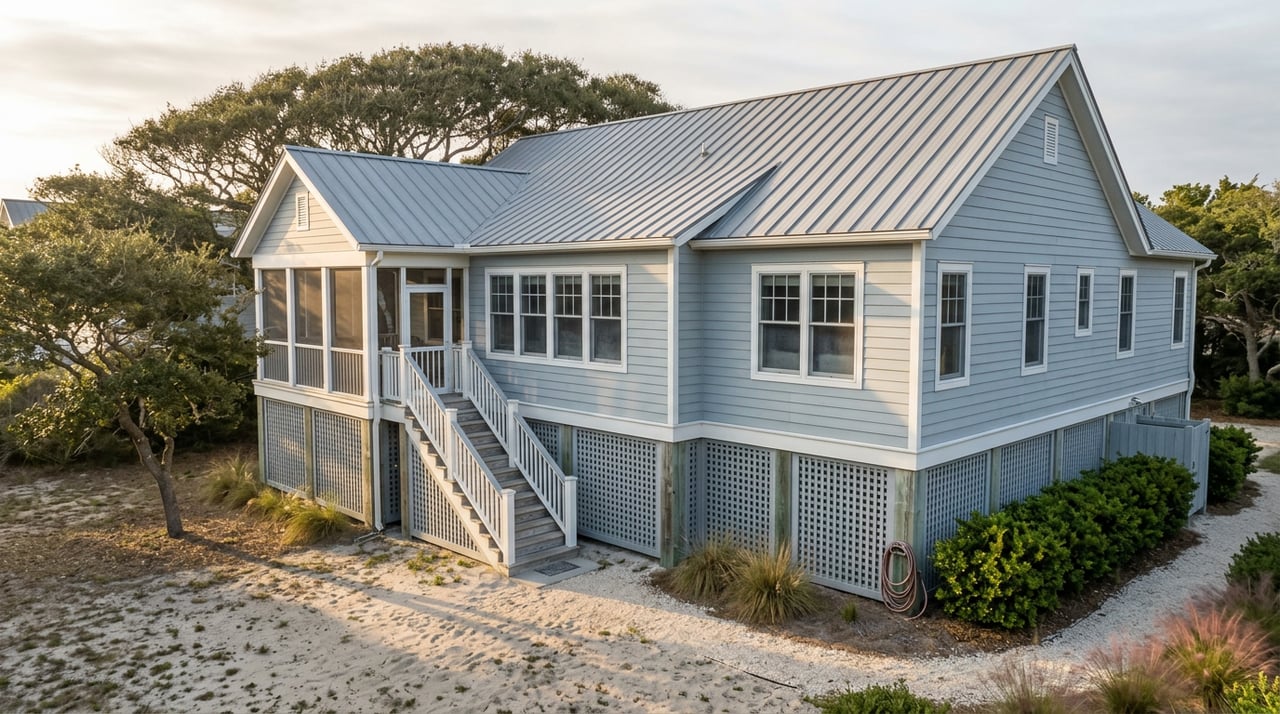
Walk the beach access south of Avon Pier this week and the sand feels different underfoot: wider, looser, still settling into its new shape after a summer of heavy equipment. Locals have been calling it "the new beach" since June. But if you've assumed the project wrapped when the dredges left, you're only tracking half the timeline. The sand placement was the loud part. The part that actually determines whether these dunes hold through next winter's storms is happening quietly right now, in September, and it won't be finished until mid-December.
That's the piece worth understanding if you live here or spend real time on this stretch of Hatteras Island: the June 25 "complete" headline and the actual completion date are two different things, separated by six months of dune grass establishment that nobody photographs for the news.
The Four Weeks Everyone Watched
Dare County's contractor, Great Lakes Dredge and Dock Company, began pumping sand onto Avon's beach on May 28, 2026, using the hopper dredge Liberty Island. The work ran from just south of Avon Pier down to the project's southern boundary near Greenwood Place, moving in stages between Pampas Drive and Yucca Street as crews finished sections and taper zones. A mechanical issue pulled the Liberty Island offline for repairs in Norfolk partway through, and a second dredge, the Amelia Island, finished the remaining volume. By the time it wrapped on June 25, the project had placed approximately 375,000 cubic yards of sand along the village's oceanfront.
If you were walking the beach in early June, this is the part you saw: pipes, staging equipment, and a beach that visibly widened week to week. It's also the part most beach nourishment coverage stops at, because "sand placement complete" reads like a finish line.
What "Complete" Actually Meant on June 25
It wasn't a finish line. It was the end of one phase in a project that has a permit condition attached to it: the newly built dunes have to be planted with vegetation before the work is considered done under the terms of the special use permit. On July 7, 2026, the Dare County Board of Commissioners approved a $95,000 contract with Coastal Transplants, a company based in Bolivia, North Carolina, to handle that planting for both the Avon and Buxton projects. In Avon, that means up to 90,000 native, salt-tolerant plants, mostly American beachgrass, sea oats, and bitter panic grass, installed roughly 24 inches apart along about 6,000 linear feet of newly nourished shoreline south of the pier.
Assistant County Manager Dustin Peele told commissioners the county went back to the same contractor that handled planting after the last round of nourishment in Avon and Buxton. His reasoning was simple.
"They did a great job."
The work is permitted to run from July 1 through December 15, 2026. So as of early September, the visible sand has been sitting there for months, but the project that's supposed to make it stick around is only about a third of the way through its own calendar, with the bulk of the planting window, and all of hurricane season, still ahead of it.
There's a smaller detail tucked into county updates that tells the same story from a different angle: even after the dredges left, the parking lot at ORV Ramp 38, which served as the staging area for the whole project, stayed closed through mid-July while crews finished demobilizing equipment. The ramp itself never closed to beach driving. Only the lot did. If you've been confused about why you could drive onto the beach at Ramp 38 all summer but couldn't park a truck there, that's why. It's a good reminder that "project complete" and "everything back to normal" arrive on different schedules, and neither one lines up neatly with the headline date.
Why Avon Went First
Here's the detail that surprised me most in tracking this project: Avon's 2026 nourishment wasn't originally supposed to happen this year at all. It was scheduled for 2027, on the same five-year cycle as most Dare County beach work. The county moved it up because of what was happening in Buxton, the next village south, where a series of oceanfront home collapses and worsening erosion rates pushed the county to accelerate both projects together and run them back to back, Avon first, then Buxton.
That matters if you live in Avon and have wondered why your beach suddenly needed 375,000 cubic yards of new sand. The urgency behind the timeline wasn't primarily about Avon's own erosion rate. It was about keeping the contractor's equipment mobilized for a bigger, more time-sensitive job just down the highway, and doing Avon's smaller project first made logistical sense before the dredge moved on to place roughly 2 million cubic yards in Buxton starting in late July.
None of that makes Avon's new sand less real or less useful. It does mean the timing was borrowed from a neighbor's more urgent problem rather than a signal that Avon's own shoreline was in crisis this year.
What to Actually Watch For Between Now and December
If you're walking, driving, or fishing this stretch of beach through the fall, here's what marks real progress versus what's just leftover from summer:
- Roped-off or flagged sections of dune crest south of the pier are planting zones, not construction leftovers. Give them room to establish.
- New beachgrass will look sparse and stringy at first. It thickens over its first full growing season, so don't expect a green dune by Thanksgiving.
- The Ramp 38 parking lot situation should fully resolve well before the December 15 planting deadline, once Coastal Transplants finishes its work there.
- Sand volume will keep shifting with wind and tide through hurricane season, which is normal and doesn't mean the project failed.
None of this requires action from residents. It's just useful context for reading what you're looking at when you're out there.
A Pier That Didn't Need Saving
One more piece of this year's story runs in the opposite direction from the nourishment project, and it's worth knowing if you fish or walk the pier regularly. The Avon Fishing Pier opened for its 2026 season on April 2, one of the earliest openings in recent memory. The reason was almost anticlimactic: a quiet fall and winter with no major storm damage meant the pier only needed some replaced deck boards and hand railings before it could open, instead of the more extensive repairs that have pushed past openings into May or later.
Put those two facts side by side and you get a more accurate picture of this stretch of Hatteras Island than either one gives you alone. The beach itself needed a serious, county-funded intervention this year, timed around a neighboring village's more urgent erosion problem. The pier, an older wooden structure that's taken its share of storm hits over the decades, came through the same winter essentially unscathed. Barrier island weather doesn't distribute damage evenly, even across a few hundred yards of the same shoreline.
Living With It Through the Fall
If you've got out-of-town guests asking why the beach looks different than it did last year, now you've got the actual answer: about 375,000 cubic yards of new sand, placed over four weeks with one dredge swap in the middle, backed by a planting contract that runs through mid-December. The wide beach is real and it's yours to use. The project behind it just isn't finished the way the June headlines made it sound, and knowing the difference is the kind of thing that makes you feel like you actually live here instead of just visiting.
If you're weighing what a season like this means for a property you already own on this stretch of Hatteras Island, or you're trying to understand how shoreline projects like this one factor into buying here, Gabe Stabley has spent two decades watching these barrier island rhythms play out in real time. Let's Connect.